
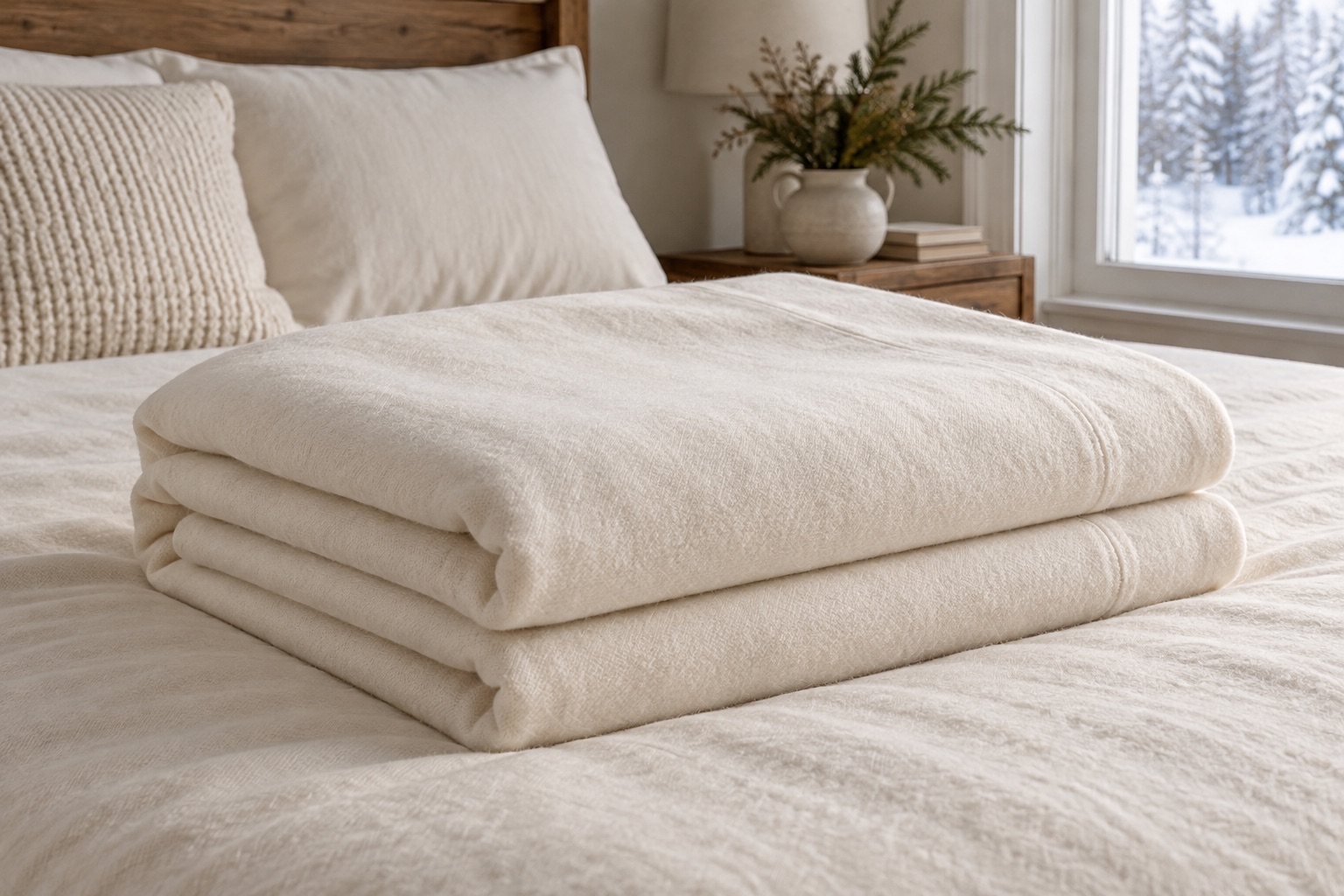
Cotton flannel sheets can be a welcome winter change if you dislike getting into a cool, crisp bed. They are not automatically the best choice for every sleeper: the brushed feel, your pajamas, room conditions and tolerance for warmth all matter. Before replacing a cotton set you already like, check the fiber label and the return policy, then think about what you want the sheet to feel like at bedtime and later in the night. No sheets were tested for this guide.
What feels different when you get into bed?
Many people describe flannel sheets as warmer and softer at first contact than the smooth cotton sheets they normally use. That immediate change is often the reason they reach for flannel in winter: the surface feels less cool against the skin, and the bed feels inviting without waiting for the sheets to warm up.
Others prefer the dry, crisp feel of their usual cotton sheets and find a fuzzy surface too enveloping. A few people who tried flannel describe feeling hot or sweaty, while some enjoy it beyond winter in a cooler room. These are experiences with different products and sleeping conditions, not a controlled comparison of cotton fabrics.
The experiences do not establish a temperature at which everyone should switch. Your blanket, duvet, pajamas and room all contribute to the result. Someone who wants a warmer initial feel may enjoy a brushed sheet; someone who already wakes hot may prefer to keep the current sheet and adjust a removable layer instead.
For the feel of a crisp cotton alternative, see the percale feel guide. The sheet decision guide starts with other preferences, including how close or structured you like the fabric to feel.
One person considering the change had heard three objections: that flannel would be unnecessary with winter pajamas, that the brushed surface would catch on sleepwear, and that its soft nap would wash away. The conflicting experiences address those concerns separately; none provides a controlled test that settles all three for every product.
Many people who prefer flannel say the familiar cold first touch is the part they most want to change. Their enthusiasm centers on the feeling when they first get into bed, rather than a measurement of room temperature or a comparison of heat loss. Some describe staying with flannel for years because they like that contact; the accounts do not identify the precise composition of every set.
A minority report the opposite: the fuzzy surface itself feels unpleasant, or the bed feels too warm once they are under the covers. A fabric that feels cozy to one person may therefore be unwelcome to another. These accounts involve different beds, sleepwear and rooms, so the contrast does not establish how any particular cotton sheet will perform.
First check what “flannel” means on the label
Flannel describes a fabric and its surface, not the fiber content by itself. CottonWorks defines flannel as a woven fabric brushed to raise surface fibers and create softness and cover. This guide focuses on cotton flannel; a product with a blend or another fiber may have different properties and care instructions. A fuzzy touch alone does not establish cotton content.
Read the complete fiber-content statement on the sheet or product listing. In the United States, the FTC’s Textile Fiber Rule requires covered textiles to disclose their constituent fibers and percentages, among other information. Check the sheet’s own label, because a product name and a description of its finish are not substitutes for fiber composition.
Will it catch on pajamas?
The answer in personal accounts is mixed. Many pajama wearers say they find flannel sheets comfortable and do not regard pajamas as a reason to avoid them. Others notice that certain sleepwear fabrics seem to catch against the brushed surface or make turning over feel less free. People do not consistently identify both the sheet construction and the exact clothing material, so these observations do not establish a universal rule.
Some people suggest smoother, satin-feel sleepwear when they dislike the sensation of two textured surfaces together. That is a personal workaround, not a verified guarantee that a particular fabric combination will reduce friction or static. Others simply prefer their existing pajamas and see no need to change them.
People who are comfortable wearing pajamas with flannel challenge the idea that the two cannot be used together. Some say the sheet does not cling like felt at all; others say that certain sleepwear seems to stick against the sheet, making it harder to move freely. The available accounts do not separate the sleepwear material from the sheet’s brushed surface in a comparable test.
Some describe switching to smoother-feeling sleepwear as a way to make turning over easier, while others say they have no sticking problem to solve. These are individual choices and do not show which fibers or finishes will work for every combination. The seller’s description alone cannot tell you how your own pajamas will feel against a particular set.
If you sleep hot, consider a removable layer
Not everyone finds the brushed surface comfortable all night. Some people find flannel too warm or sweaty, while others say they prefer their ordinary sheets throughout the year. The accounts do not establish that cotton flannel causes a health problem or that all people who perspire at night should avoid it.
A different approach is to keep a familiar lightweight sheet and add a blanket or duvet when needed. People who prefer layers value being able to remove one when they feel warm. Others would rather change the sheet itself because they want the brushed surface against their skin; neither choice proves that one setup is universally warmer.
Compare the whole bed you already own before buying. If you are usually warm, a removable layer or a swatch may be the lower-commitment first step. If you dislike the cool first contact of your current sheets, a clearly labeled cotton flannel set could be worth trying where the seller’s conditions allow. For other considerations, see cotton sheets for hot sleepers.
Does the soft surface survive washing?
Some owners report that their flannel sheets become softer with use and remain comfortable for a long time. Others describe pilling, lint or a loss of the feel they liked. A positive experience may reflect a particular product and its care history; a disappointing one does not establish that every flannel set will behave the same way.
The accounts do not supply comparable fabric weights, wash cycles and drying conditions, so they cannot tell you how many washes a nap will last. CottonWorks notes that abrasion during laundering and drying can change fabric appearance through fuzzing or pilling. That explains why care and construction are worth checking, but it does not predict the outcome for a particular sheet.
Before buying, read the actual care label and consider whether its washing and drying instructions fit your routine. Use the settings and any limits stated by the manufacturer; avoid improvised treatments. Wash separately from incompatible items if the label calls for it, and avoid an overloaded machine. The cotton sheet washing guide and pilling guide explain related care choices.
Experiences of wash wear are similarly mixed. Some owners describe sheets that retained a soft, brushed feeling through years of use; a smaller number report lint, pilling or a surface that changed. The reports do not use the same products or record comparable laundry routines, and often do not distinguish cotton from a blend. They cannot establish a general number of washes before a change.
Some people associate a poor experience with the particular set they bought rather than with every sheet called flannel. Others regard the warmth and texture as worthwhile precisely because their own sets remained comfortable. These contrasting individual accounts cannot identify a superior product or prove that a new set will age in the same way.
Choose between changing the sheet and adding warmth
A flannel sheet changes the surface touching you. A blanket or duvet adds a layer above the sheet and can be removed when your needs change. People in favor of flannel often value that soft first contact; people who prefer layering can keep the sheet texture they already enjoy. Some mention jersey or other bedding as another possibility, but those reports do not make any alternative automatically right for you.
Before you order
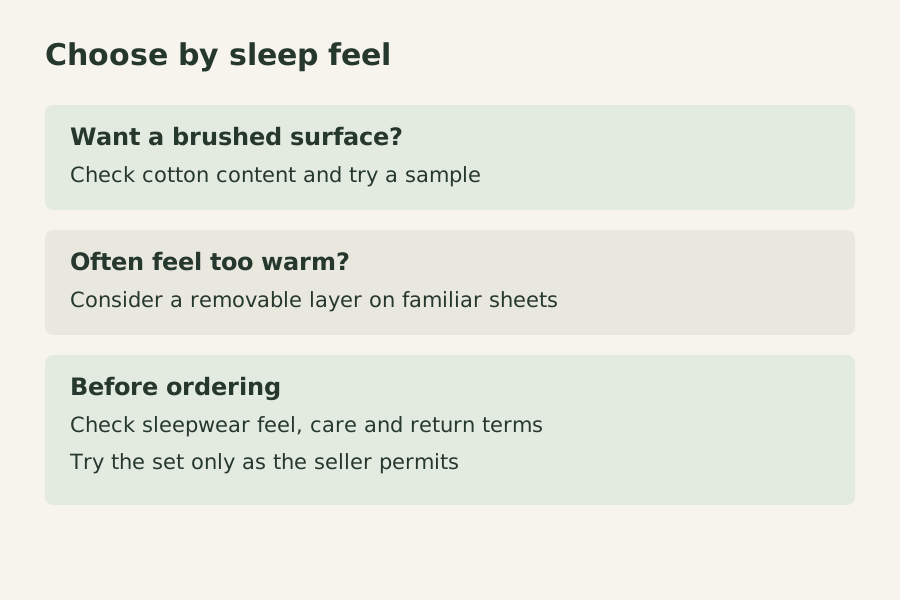
- Check the full fiber label and confirm the product is cotton flannel if that is what you want.
- Ask how the surface is brushed and what the listed weight and units mean.
- Compare the soft, brushed feel with the crispness or smoothness you already prefer.
- Consider your normal sleepwear, warmth preferences and the layers already on the bed.
- Read the exact wash and dry instructions, dimensions and return terms.
- If allowed by the seller, wash as directed and assess the fit and feel with your usual sleepwear; keep your order details and label.
A cotton flannel set is worth considering if its brushed feel suits you and its care works in your household. If you are uncertain about warmth or contact with pajamas, start with a sample or a removable layer until you can make a more informed choice.
How this guide was prepared
This guide draws on individual sleep experiences and textile guidance; no sheets or products were tested. Experiences do not establish comparative performance.
Sources and scope
- Reddit discussion · r/Bedding · 286 comments
- FlannelCottonWorks
Definition of brushed woven flannel.
- Textile Fiber RuleFederal Trade Commission
US fiber content labeling for covered textiles.
- Quality TestingCottonWorks
Laundering abrasion can contribute to fuzzing and pilling.
Questions & discussion
Share a question or a useful experience about this guide. Comments appear immediately. Your name and comment are public. Email is optional and stays private; reply emails are not enabled yet. Comment privacy.