
Cotton Life Cycle Assessment: Evidence, Context and Better Choices
Learn how cotton life cycle assessment works, what study boundaries change, and how to evaluate environmental claims and make better product choices.
Read guide →Understand cotton sustainability claims, standards, impacts and trade-offs with appropriate evidence boundaries.
Learn how cotton life cycle assessment works, what study boundaries change, and how to evaluate environmental claims and make better product choices.
Read guide →Learn how durability, reuse, recycled cotton, product design, care and credible claims shape a practical cotton circular economy.
Read guide →Cotton sheds fiber fragments during use and washing. Learn what affects shedding, how cotton differs from synthetics and what labels can—and cannot—prove.
Read guide →Understand what shapes cotton’s carbon footprint, why estimates vary, how to assess environmental claims and which choices can reduce product impacts.
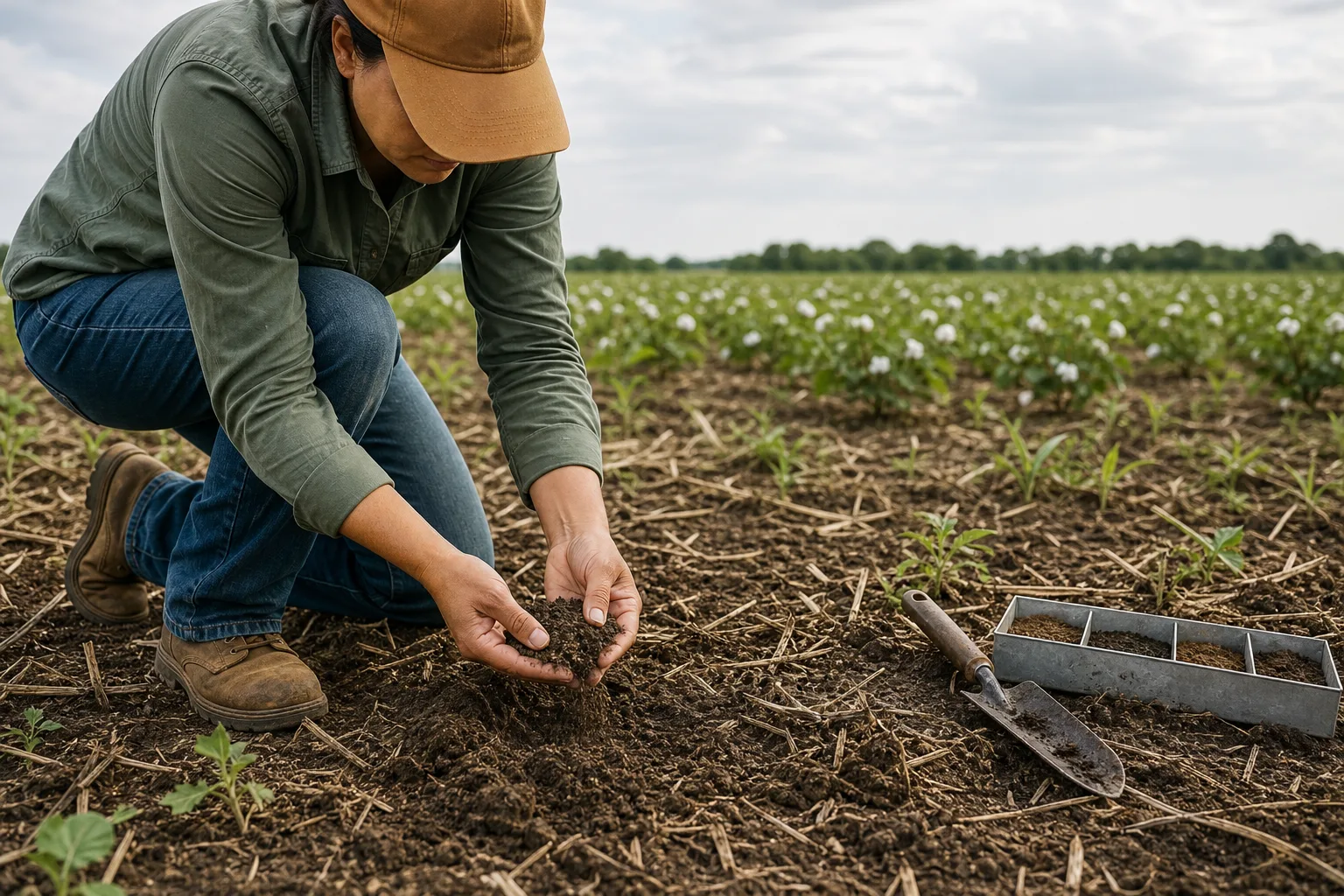
Read guide →Learn what soil health means in cotton farming, how it is measured, which practices may improve it, and how to assess sourcing and product claims.
Read guide →Understand cotton water use, including rainwater, irrigation, local scarcity, textile processing, labels and the evidence needed for better choices.
Read guide →Production, supply chains and prices behind the label.
Understand US cotton production, USDA fiber classification, Upland and Pima cotton, export markets, textile quality, labels and sustainability claims.
Read guide →Learn how supply, demand, fiber measurements, processing stage, location, contracts and verified sustainability claims influence cotton prices.
Read guide →Learn how woven and knitted cotton differ in construction, stretch, stability, care, quality metrics, labels and sustainability claims.
Read guide →Follow cotton from farm and gin to yarn, fabric and finished goods, with clear guidance on fiber quality, traceability, labels and sustainability claims.
Read guide →