
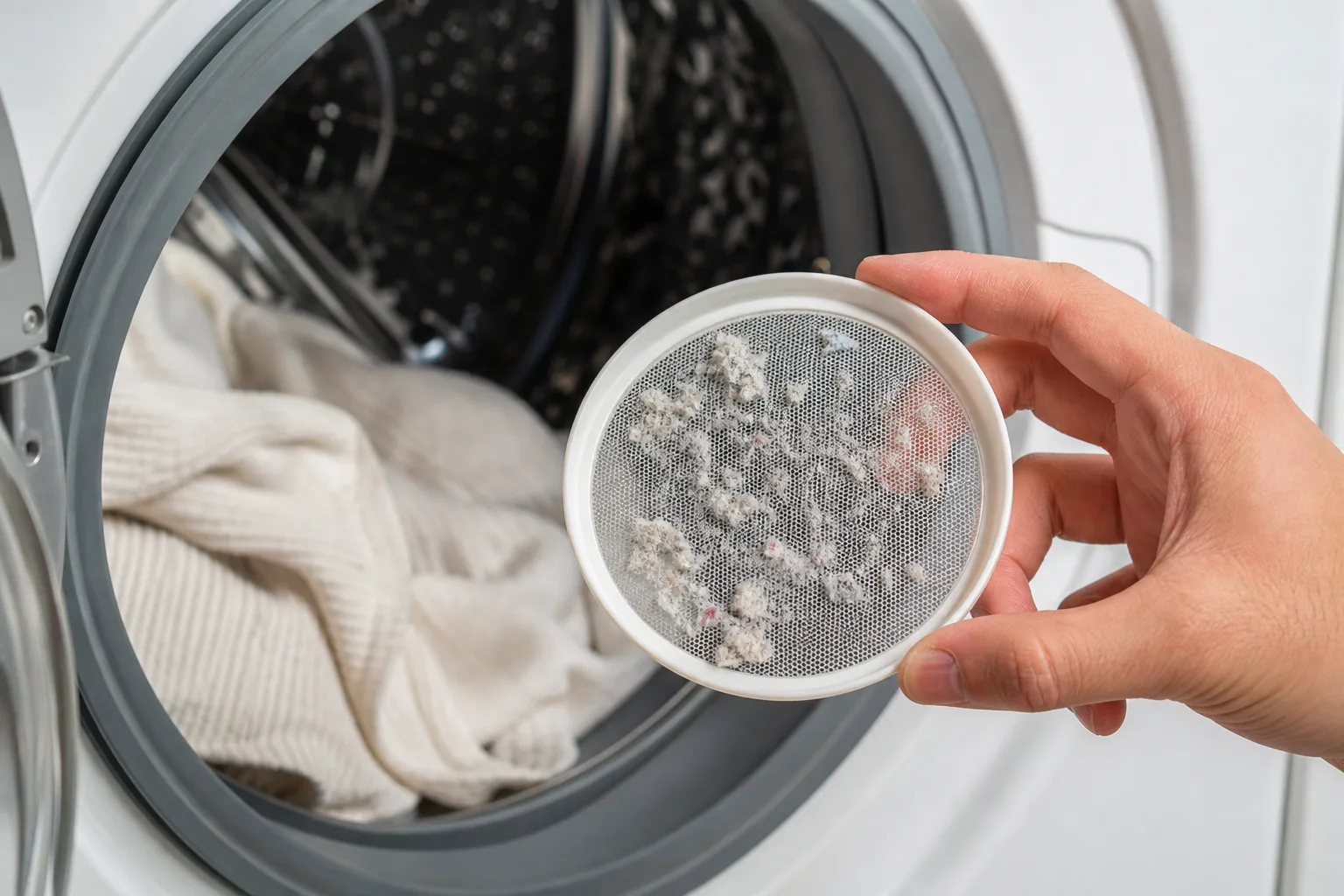
Yes, cotton sheds microfibers—more precisely called fiber fragments—during manufacturing, use and laundering. This is not unique to cotton: all textile fibers can fragment. The important questions are how much a finished product releases, what controls that release and what happens to the fragments afterward. Pure cotton fragments are cellulose rather than plastic and can biodegrade under suitable conditions, but that does not make every cotton product shed-free or every released fragment environmentally harmless.
The short answer: shedding is a product property, not just a fiber property
Asking “does cotton shed microfibers?” is a useful starting point, but the fiber name supplies only part of the answer. Two products labeled 100% cotton can perform differently because they use different cotton qualities, spinning systems, yarn twists, fabric structures, surface treatments and care instructions.
Textile Exchange describes fiber fragmentation as an issue relevant to synthetic and non-synthetic fibers. It identifies textile construction, finishing, washing method, detergent, product age and fiber type among the variables that may influence release.[1] Consequently, “cotton” is not a measurable shedding result. A reliable low-shedding claim needs evidence from a representative finished product tested by a defined method.
Two meanings of “microfiber”
The terminology can be confusing. In textile manufacturing, microfiber traditionally describes an exceptionally fine fiber, commonly polyester or polyamide. In environmental discussions, microfiber is often used more broadly for a small, fiber-shaped particle released from a textile. “Fiber fragment” avoids mixing these meanings.[1]
A product marketed as a “microfiber cloth” is therefore not necessarily a product proven to release more—or fewer—fragments. The term usually describes the fineness and construction of its fibers, not a laboratory shedding result.
What affects fiber release from a cotton textile?
Raw fiber quality
USDA cotton classification measures properties including fiber length, length uniformity, strength and micronaire, along with color and foreign matter. Length and uniformity influence spinning performance and yarn quality, while fiber strength indicates the force required to break a bundle of fibers.[2] Explore these measurements in the cotton quality guide and HVI testing overview.
These measurements can help a mill select cotton for a suitable yarn, but they do not directly report how many fragments a finished T-shirt, towel or sheet will release in a wash. Between bale classification and the finished product are spinning, fabric formation, preparation, dyeing, finishing, cutting, sewing and consumer care.
Yarn formation
Fibers must be held together in yarn before most cotton fabrics can be made. Fiber alignment, short-fiber content, yarn twist, yarn evenness and the spinning system can affect surface hairiness and durability. Combing removes some shorter fibers and impurities, generally producing a smoother, more even yarn than basic carding, but “combed cotton” is still not a guarantee of a particular shedding rate. See combed versus carded cotton and ring-spun versus open-end yarn for the practical distinctions.
Fabric construction and surface
Knitted and woven structures restrain yarns differently. Fabric density, stitch or weave settings, yarn exposure and intended texture can all affect abrasion and the accessibility of loose surface fibers. A fuzzy sweatshirt, brushed flannel and looped towel should not be assumed to behave like a smooth, tightly constructed shirting fabric merely because each is cotton.
Pilling evidence illustrates the wider principle: CottonWorks notes that surface behavior is affected by fiber dimensions, yarn and fabric construction, finishing and end use.[3] Pilling and fragment release are not identical tests, but both show why surface durability must be evaluated at product level. Related guides cover cotton pilling, abrasion resistance and weaving versus knitting.
Dyeing and finishing
Finishing may remove protruding fibers, stabilize a fabric, raise a soft surface or deliberately create a worn appearance. Some processes therefore have competing effects. For example, CottonWorks explains that cellulase biopolishing can create a smoother cotton surface by hydrolyzing surface fibers, while also causing fiber loss during the treatment itself.[4] A soft handfeel, brushed finish or “vintage wash” should be treated as a description, not proof of durability or low shedding.
Cotton fragments and synthetic microplastics are not the same
Fragments from pure cotton are cellulose-based and are not plastic. Fragments from polyester, nylon, acrylic and other plastic-based fibers are microplastics when they meet the relevant size definition. That material distinction matters because environmental persistence is part of the risk.
CottonWorks summarizes controlled aquatic research in which cellulosic cotton fragments biodegraded substantially more than polyester fragments in wastewater, fresh water and salt water test environments.[5] This supports a carefully limited conclusion: cotton has a different environmental fate from conventional plastic-based fibers under the conditions studied.
Biodegradable does not mean impact-free
Biodegradation depends on environmental conditions, time, microorganisms and the physical and chemical characteristics of the material. A cotton fragment does not necessarily disappear immediately after leaving a washing machine. Dyes, finishes and substances picked up during use may also travel with released material. Textile Exchange therefore cautions that fiber-fragment pollution concerns include more than the number or polymer type of fragments.[1]
Avoid broad claims such as “harmless,” “leaves no trace” or “completely pollution-free” unless they are supported for the entire product and its realistic disposal pathways. Choosing cotton can avoid adding plastic fibers when the product is genuinely 100% cotton, but it does not remove the need for durable design, responsible chemistry, wastewater controls and longer product use.
Blends need separate attention
A cotton-polyester or cotton-elastane product can release both cellulosic and plastic-based fragments. Even a small synthetic component may be functionally important, as with stretch yarns. Check the complete sewn-in composition instead of relying on a prominent “cotton” statement on the front of the package.
What labels and marketing claims actually tell you
In the United States, the FTC requires covered textile labels to disclose constituent fibers by generic name and percentage by weight, subject to specified rules. A product described as 100% cotton should contain only cotton apart from permitted exclusions such as certain trim.[6] Composition is valuable information, but it is not a durability grade or shedding certificate.
| Claim or information | What it can tell you | What it does not prove |
|---|---|---|
| 100% cotton | The disclosed textile fiber content is cotton, subject to applicable labeling rules. | A specific shedding rate, fabric strength, farming method or absence of finishes. |
| Cotton blend | Cotton is combined with one or more disclosed fibers. | That released fragments are free of plastic; read every percentage. |
| Combed or ring-spun | A yarn preparation or spinning method that may influence smoothness and yarn character. | Low shedding without finished-product test data. |
| Long-staple, Pima or Egyptian | A claimed cotton type or fiber-length association when accurately used. | Finished-product durability, authenticity beyond the substantiated claim, or low fragment release. |
| Organic, regenerative or Better Cotton | A farming or sourcing claim when linked to a defined, verified program. | A measured laundering-shedding result. |
| Biodegradable | A potential end-of-life characteristic under stated conditions. | Immediate breakdown in every environment or zero environmental impact. |
| Microfiber fabric | Usually a fabric made with very fine fibers, often synthetic. | A measured rate of fiber fragmentation. |
For broader purchasing context, see how to assess cotton quality, cotton certifications and organic versus conventionally grown cotton.
Better choices for consumers
No simple label identifies the lowest-shedding cotton product. Consumers can nevertheless make more informed choices by combining composition, construction, durability and care information.
- Read the full fiber label. Choose 100% cotton when your priority is avoiding fragments from polyester, nylon or elastane. Do not infer the full composition from a product name or front-facing cotton claim.
- Inspect the surface. Look for excessive loose fuzz, unstable pile, damaged loops or material that comes away with light handling. This is a screening check, not a laboratory test.
- Favor construction appropriate to the use. A lightweight fashion knit and a workwear fabric have different performance requirements. Density alone is not a universal quality score.
- Ask for relevant evidence. If a seller claims “low shed,” request the test method, sample description, number of wash cycles and result. A comparison is meaningful only when products are tested under equivalent conditions.
- Choose products you can keep in service. Reinforced seams, replaceable components and suitable fabric weight may matter more than an undefined environmental slogan.
- Follow the care label. FTC guidance requires apparel care instructions to have a reasonable basis and account for the completed garment.[7] Use the least aggressive permitted routine that cleans the item effectively, avoid unnecessary cycles and repair damage before it spreads. Consult the cotton washing guide and drying guide.
Lint visible after an early wash does not, by itself, establish a product’s lifetime shedding performance. Manufacturing debris and loose surface fibers may be removed during initial care, while abrasion and aging can alter later release. Comparable, repeated-cycle testing is needed to characterize the pattern.
Guidance for brands, mills and product developers
Specify the finished product, not only the preferred fiber
A material strategy should connect raw fiber selection to yarn, construction, finishing and expected care. USDA classing data can support cotton purchasing and mill processing, but it should not be presented as a finished-product shedding test.[2] Specifications may need to address yarn evenness, twist, fabric mass and density, surface treatment, abrasion resistance, pilling and strength alongside fiber-fragment testing.
Use a recognized method and report enough context
As of 2026, the Global Organic Textile Standard manual recognizes the need for baseline shedding data and lists ISO 4484 parts 1–3, AATCC TM 212 and The Microfibre Consortium method among accepted methods for its monitoring initiative.[8] Method selection should match the intended claim and product category.
A useful test report should identify at least the fiber composition, yarn and fabric structure, finishing state, sample preparation, laundering conditions, detergent, cycle count, collection method, result units and laboratory. Comparisons should use aligned protocols. A result from unfinished fabric should not automatically support a claim about a dyed, treated and sewn product.
Keep claims narrow and verifiable
- Say “100% cotton” only when the complete fiber disclosure supports it.
- Do not translate “organic,” “long-staple,” “combed” or “premium” into an untested low-shedding claim.
- State the conditions behind biodegradability claims and account for blends, coatings, prints, sewing threads and accessories.
- Distinguish reduced fragment release from improved biodegradation; they are different performance questions.
- Retain evidence for environmental comparisons and avoid implying that one attribute settles the product’s entire sustainability profile.
Fiber fragmentation belongs within a broader cotton sustainability assessment that also considers farming, processing, chemistry, durability, care and end of life. For farm-level context, see the guides to soil health and water use.
Bottom line
Cotton does shed microfibers, as do other textiles. Pure cotton fragments differ from synthetic microplastics because cotton is cellulose-based and can biodegrade under suitable conditions, but biodegradability should not be confused with zero release or zero impact. The amount shed is a finished-product performance question shaped by fiber quality, yarn, construction, finishing, use and care. Consumers should read complete composition labels and prioritize durable, serviceable products. Industry claims such as “low shed” should be based on comparable testing of the actual finished article—not on the word “cotton” or another marketing term alone.
Frequently asked questions
Does 100% cotton release microplastics?
Pure cotton releases cellulose-based fiber fragments, not plastic fibers. However, sewing threads, prints, coatings, trims or undisclosed synthetic components may complicate the composition of a complete product.
Does organic cotton shed fewer microfibers?
Not necessarily. Organic describes how cotton is grown and certified; it is not a finished-product shedding measurement. Yarn formation, construction, finishing, use and care can have more direct effects on fragment release.
Is combed cotton low shedding?
Combing removes some short fibers and can create a smoother, more even yarn, but the term alone does not prove low shedding. The finished fabric and product would need relevant testing.
Are biodegradable cotton microfibers harmless?
No such blanket conclusion is justified. Cotton fragments can biodegrade under suitable conditions, but degradation is not immediate or identical in every environment. Dyes, finishes and substances carried by fragments may also matter.
How can a low-shedding textile claim be checked?
Ask for the test method, sample composition and construction, finishing state, washing conditions, cycle count, result units and laboratory. Comparisons should use the same protocol and representative finished products.
How this guide was prepared
This page is based on desk research conducted on October 11, 2026 using published technical guidance from USDA, the Federal Trade Commission, Textile Exchange, the Global Organic Textile Standard and CottonWorks by Cotton Incorporated. It translates source material on cotton classification, textile construction, durability, finishing, labeling, care and fiber-fragment research. No laboratory testing, product trial, mill inspection, farm visit or first-hand performance assessment was conducted.
Sources and scope
- Preferred Fiber & Materials Market Report 2020: Microfiber SheddingTextile Exchange
Explains fiber-fragmentation terminology, confirms relevance across fiber types and identifies construction, finishing, washing, detergent, fiber type and product age as influencing variables. ([textileexchange.org](https://textileexchange.org/app/uploads/2021/04/Textile-Exchange_Preferred-Fiber-Material-Market-Report_2020.pdf?utm_source=openai))
Accessed 2026-10-11 - Cotton Classing ServicesUSDA Agricultural Marketing Service
Defines the cotton properties measured by USDA instrument classification, including length, uniformity, strength and micronaire. ([ams.usda.gov](https://www.ams.usda.gov/services/grading/cotton-classing?utm_source=openai))
Accessed 2026-10-11 - Garment DurabilityCottonWorks by Cotton Incorporated
Supports the discussion of abrasion, surface loss and the combined effects of fiber dimensions, yarn, construction, finishing and end use on textile surface performance. ([cottonworks.com](https://cottonworks.com/learning-hub/quality-assurance/garment-durability/?highlight=PILLING&utm_source=openai))
Accessed 2026-10-11 - Garment FinishingCottonWorks by Cotton Incorporated
Describes cellulase biopolishing as a process that smooths cotton by acting on surface fibers while causing some fiber loss during treatment. ([cottonworks.com](https://cottonworks.com/learning-hub/finishing/garment-finishing/?utm_source=openai))
Accessed 2026-10-11 - Microplastics in Clothing: Cotton as a Material SolutionCottonWorks by Cotton Incorporated
Summarizes research on the different environmental persistence and biodegradation behavior of cotton and synthetic textile fragments. ([cottonworks.com](https://cottonworks.com/cotton-sustainability/microplastics-in-clothing/?utm_source=openai))
Accessed 2026-10-11 - Calling It Cotton: Labeling and Advertising Cotton ProductsFederal Trade Commission
Explains U.S. requirements for truthful cotton fiber-content disclosures, percentages and specialty-cotton claims. ([ftc.gov](https://www.ftc.gov/business-guidance/resources/calling-it-cotton-labeling-advertising-cotton-products-0?utm_source=openai))
Accessed 2026-10-11 - Clothes Captioning: Complying with the Care Labeling RuleFederal Trade Commission
Explains that garment care instructions require a reasonable basis and must account for the completed product and its components. ([ftc.gov](https://www.ftc.gov/business-guidance/resources/clothes-captioning-complying-care-labeling-rule?trk=article-ssr-frontend-pulse_little-text-block&utm_source=openai))
Accessed 2026-10-11 - Manual for the Implementation of GOTS Version 8.0Global Organic Textile Standard
Documents the GOTS fiber-fragment monitoring initiative and its accepted shedding test methods, including ISO 4484, AATCC TM 212 and the TMC method. ([global-standard.org](https://global-standard.org/images/resource-library/documents/standard-and-manual/Manual_for_the_Implementation_of_GOTS_v8.0_signed.pdf?utm_source=openai))
Accessed 2026-10-11
Questions & discussion
Share a question or a useful experience about this guide. Comments appear immediately. Your name and comment are public. Email is optional and stays private; reply emails are not enabled yet. Comment privacy.